



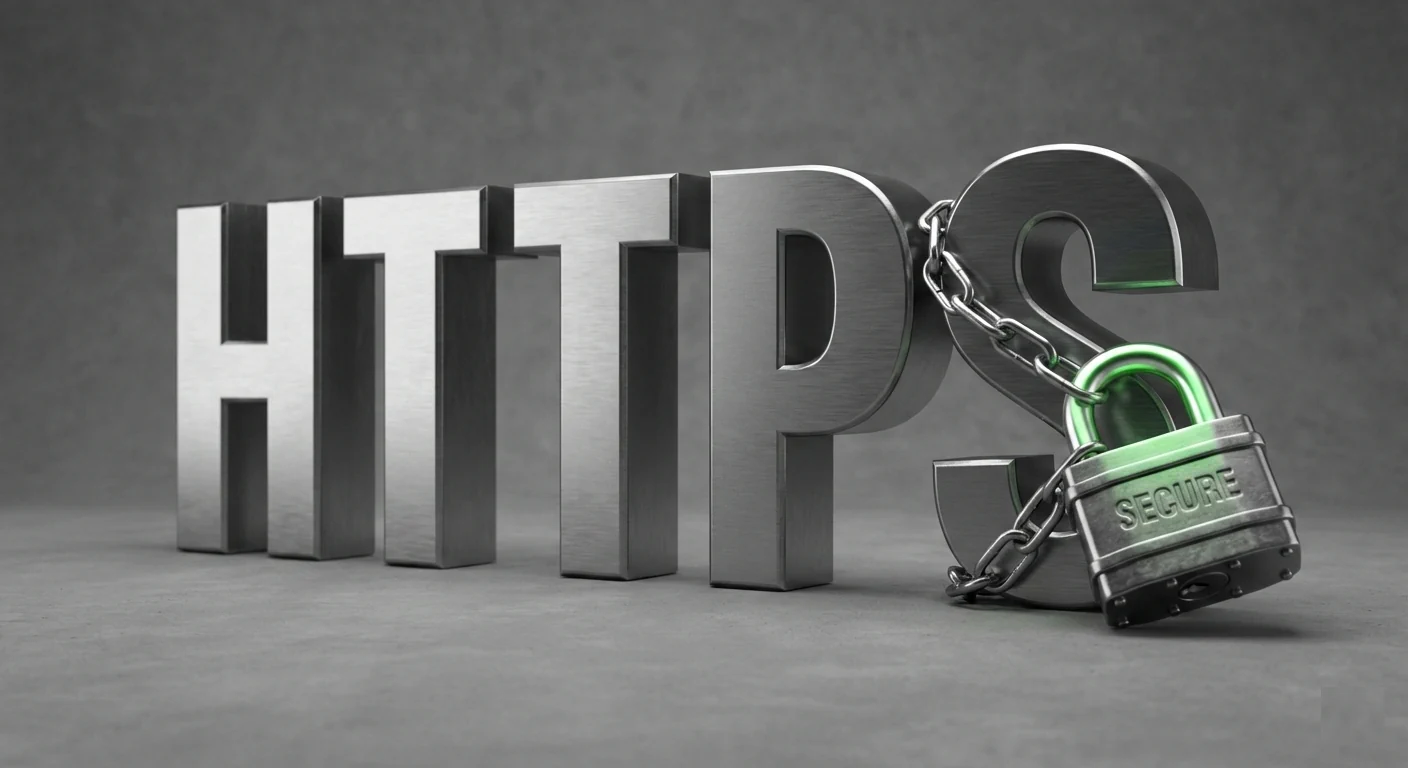
If you’re like most people, that warning is enough to make you hit the “Back” button faster than a caffeinated squirrel.
As an SEO specialist, I spend a lot of time looking at the technical “under the hood” stuff of websites. But today, I want to talk about something that is part technical, part psychological, and 100% essential for your business: HTTPS.
What Exactly Is the “S” in HTTPS?
In the simplest terms, HTTPS (Hypertext Transfer Protocol Secure) is the secure version of the old-school HTTP. Think of HTTP like sending a postcard through the mail—anyone who handles that postcard along the way can read exactly what’s written on it.
HTTPS is like taking that same message, putting it in a titanium-locked envelope, and hiring a private security detail to deliver it.
Using an SSL (Secure Sockets Layer) certificate, HTTPS encrypts the data moving between your user’s browser and your server. This means that if a hacker tries to intercept a password, a credit card number, or even a simple email address, all they see is a jumbled mess of gibberish.
Why Google Cares
If you want your website to show up on the first page of search results, you have to play by Google’s rules. Way back in 2014, Google officially announced that HTTPS is a ranking signal.
While it’s often called a “lightweight” factor—meaning it won’t magically shoot you to #1 overnight—it acts as a powerful tie-breaker. If you and your competitor have equally great content, but they have HTTPS and you don’t, guess who Google is going to favor?
Beyond the rankings, there’s the User Experience (UX) side of SEO:
- Reduced Bounce Rate: If users see a “Not Secure” warning, they leave immediately. High “bounce rates” tell Google your site might not be helpful, which can tank your rankings.
- Browser Compatibility: Modern browsers (like Chrome and Safari) are increasingly restrictive. Some features, like location services or even certain types of fast-loading images, only work on secure sites.
It’s a Matter of Heart (and Safety)
SEO and code aside, switching to HTTPS is simply about showing your customers you care. When a visitor sees that padlock, it provides instant “psychological safety.” It tells them, “I value your privacy. I’ve taken the extra step to make sure your data doesn’t fall into the wrong hands.” > Pro Tip: Even if you don’t sell products on your site, users still enter sensitive info. Think about your contact forms, newsletter sign-ups, or login areas. If you’re asking for their data, you owe them the security to protect it.
The Bottom Line
In 2026, HTTPS isn’t a “nice-to-have” anymore—it’s the entry fee for doing business on the web. It protects your hard work from hackers, keeps your visitors safe, and keeps you in Google’s good graces.
Would you like me to walk you through the steps of checking if your current SSL certificate is installed correctly, or help you find a reputable provider to get one set up? M Sutton Services is a Brownsville SEO Company offering Local SEO services and website maintenance services. Or you can contact us here.